


Some Things Are Better in Your Head
I didn’t like New York anymore. I wish I did, but I don’t.
I wish I had something more romantic to say about a city that has inspired generations of writers, artists, filmmakers, and dreamers, but unfortunately, that was one of my more persistent observations during my week there. Behind the incredible skyline and exceptional culinary scenes, the city was filthy, the subway was an exercise in questionable hygiene, and I spent an unreasonable amount of time wondering whether the people who called it the greatest city in the world had ever been anywhere else.
Instead, I found myself impressed with Chicago. I loved its architecture, its magnificent river, its spacious streets, and the peculiar harmony between the grandeur of a metropolis and the comfort of a city that still seemed to have room for its people. Plus, it was a lot cleaner than New York. It wasn't perfect, of course, but I hadn't asked it to be. Perhaps, that was why it surprised me.
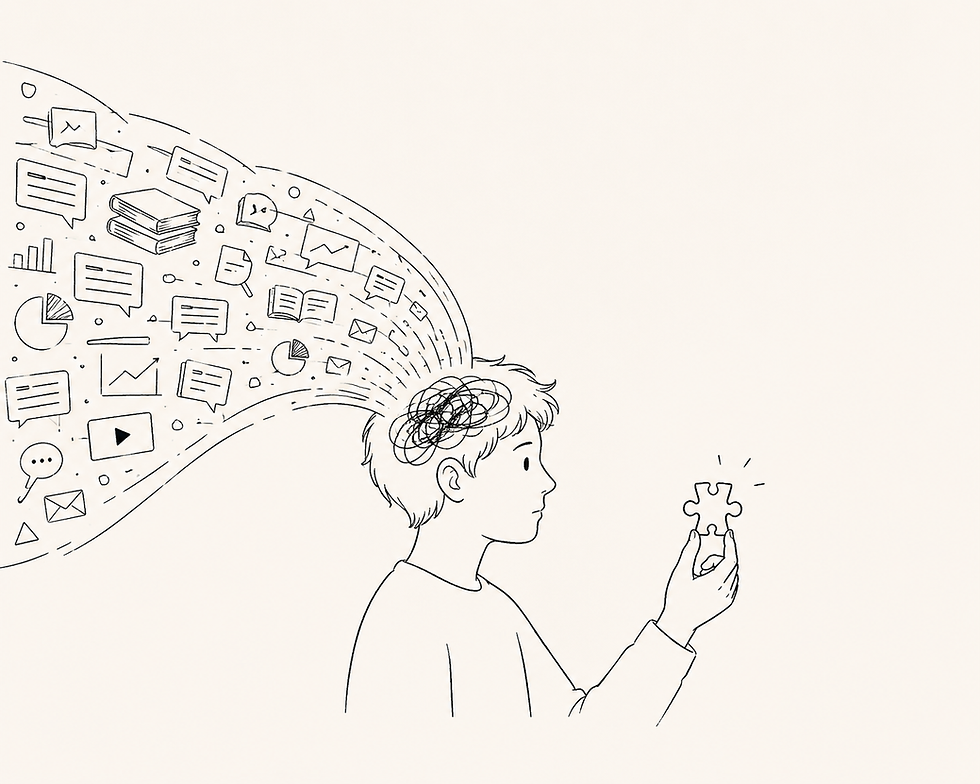
And somewhere between my surprise for one city and my disappointment with another, I began wondering how often we fall in love with things that exist almost entirely in our heads.
I've come to think that one of the more embarrassing experiences in life is realizing that something you thought you wanted for years isn't actually something you enjoy. Not because the thing itself is necessarily terrible, but because you've spent so long convincing yourself it would make you happy that admitting otherwise feels almost like a personal failure. There's a particular humiliation in getting exactly what you asked for and discovering that you would rather be somewhere else.
It happens with people, too. Sometimes we become infatuated not with who someone is, but with the person we've quietly decided they could be. We overlook their indifference, excuse their shortcomings, and assign meaning to gestures that probably meant very little. We fall in love with their potential and conversations we imagine having, and a future that exists only because we've been kind enough to invent it for us. Inevitably and expectedly, when they fail to become the person we had imagined, we feel betrayed, as though they had somehow broken a promise they never made.
This is not limited to romance, of course. We do it with success and other parts of life too. We spend years imagining what happiness will look like once we've earned enough money, built something impressive, moved somewhere beautiful, or finally become the version of ourselves we've been working towards. We attach entire emotional futures to accomplishments that, when they finally arrive, turn out to be surprisingly ordinary.
Now, of course I don't mean that achieving things is meaningless. It is very important, especially for men, to have that drive or lust for the world. I think ambition and imagination are wonderful qualities, and I would be rather miserable without either. But, there is a difference between looking forward to something and quietly deciding that it must be wonderful before we've even experienced it. One leaves room for surprise, and the other turns reality into an test it never volunteered to take.
I wonder how many things I've dismissed simply because they didn't resemble the pictures I'd drawn of them in my head and how many things I've continued pursuing long after I stopped enjoying them.
Some things really are better in your head. Others, if you're fortunate enough to encounter them without too many expectations, turn out to be better in real life.
Comments