


The Paradox of Self-Help
- Feb 5
- 4 min read
Wake up at 5 a.m., hit the gym by 6, eat a protein-rich breakfast, delay your coffee for two hours, take a cold plunge to stimulate your system, and the list goes on. Does this all sound familiar? You’ve probably heard it from your favorite fitness influencer, clipped into a sixty-second reel with cinematic lighting and a voiceover about discipline. You saved that reel didn't you? You’re probably never going to see it again.
As modern men, we’re told this is the prime way to start our day, and kudos if you can actually follow that schedule, because parts of it may even be right. Structure is good, it keeps us in line.
But the problem isn’t the routine itself, the problem is how casually it’s sold as universal, and how little context ever comes with it.
What’s rarely acknowledged is that these systems are built for a very specific type of life. A life with flexible schedules, non-chaotic, and a level of control most of us simply don’t have. When someone with a rigid job, long commute, family obligations, or financial pressure tries to copy this exact framework, the routine doesn’t empower him. It quietly disempowers him and sets him up to fail.
And when he fails, the conclusion is never that the system wasn’t designed for his life, the conclusion is always that he lacks discipline. That’s where the damage starts.
The Paradox
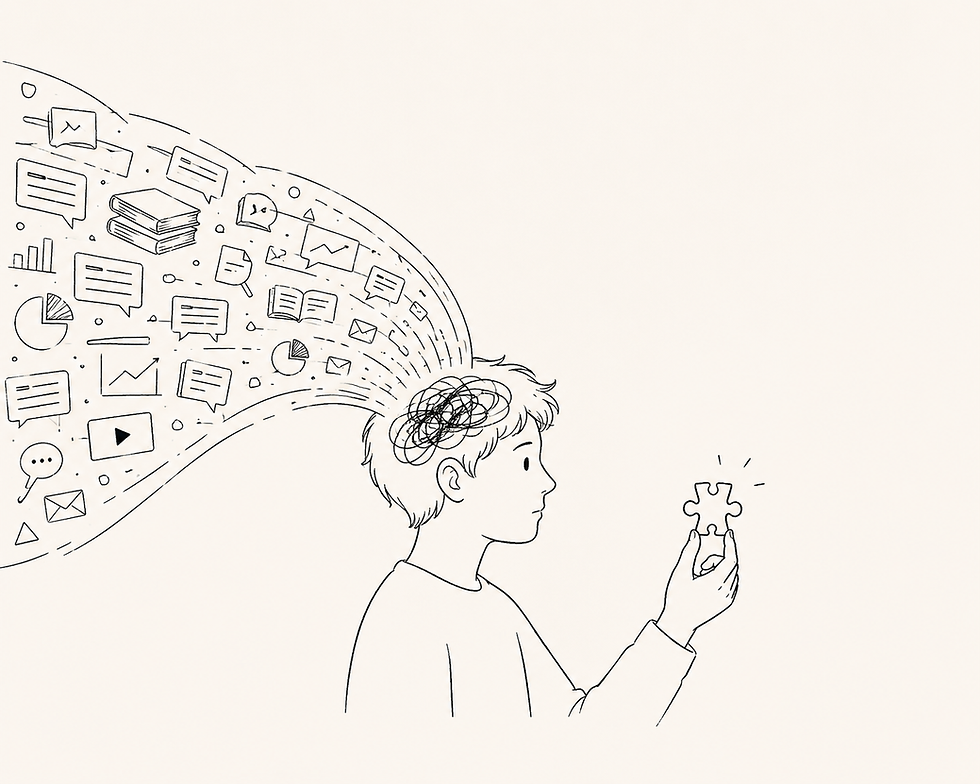
I’ve come to believe that the more a man consumes self-help, the less he actually does. Reading, watching, and planning create the feeling of progress without actually doing anything. One feels accomplished before anything has changed. I think this is because insight replaces effort, and motivation becomes a substitute for movement. Instead of building competence through repetition, mistakes, and friction, he stays stuck in preparation, mistaking understanding the books he read for achievement, or as my friend likes to say “Ah si paling teori.”
This was happening to me.
I got overstimulated. Lost in rules and schedules about how to become a “prime male.” I saw the same thing happening to other men too. Everything becomes black and white, you’re either locked in or you’re lazy, you’re either optimized or falling behind. There’s no room for adjustment, only compliance.
So we often force ourselves into systems that don’t fit their lives, break under the pressure, and then internalize the failure as a personal flaw.
That’s how self-help turns into self-hate. Every deviation feels like weakness and every tired morning feels like proof that you’re not the man you’re supposed to be. What was meant to help you ends up working against you. Instead of asking what works for your life, you start asking why can’t you keep up? What’s wrong with you?
The Reality
How do we even know the continuity of the programs and schedules presented by these self-help coaches and influencers we’re trying so hard to emulate? The honest answer is that we don’t, and we rarely ask.
What we see are fragments. A morning routine video, a workout clip and a shot of a clean desk at sunrise. What we don’t see are the skipped days, late mornings, or adjustments made when energy drops, the girlfriend sleeps over or when life interferes.
In reality, these systems are highly personalized. Many influencers control their schedules, work from home, monetize their routines, and can bend their days without real consequences. If they wake up late, the system adjusts and if they’re exhausted, the content waits.
This is where many men set themselves up for failure. They try to force a system designed for someone else’s life onto their own. Rigid jobs, long commutes, unpredictable hours, family responsibilities, and financial stress aren’t accounted for. A routine built for single men whose lives revolve around content creation will inevitably collapse under those conditions.
So instead of asking how to keep up, the more honest question is, “What does my life actually allow right now?”
A system should be engineered around your work schedule, energy levels, and obligations, not around someone else’s content calendar. If your day starts at 8 instead of 5, that’s your constraint. There was a time in my life when I woke up at 5 a.m. and genuinely had no idea what I was supposed to do with myself afterward.
If your job drains you mentally, expecting peak performance at dawn may be unrealistic. Adjust the system, but instead of adjusting, most of us double down on guilt, so we try harder, sleep less, push through, until burnout forces a reset and we’re back at square one.
What a waste of time.
Real growth doesn’t come from copying routines. It comes from designing systems that survive bad days, not just perfect ones. A routine that collapses the moment life gets messy was never strong to begin with.
Discipline isn’t about obeying a schedule, it’s about engineering something you can realistically sustain. Your ego will resist this, but if a system makes you feel like a failure for living your own life, it isn’t building you.
It’s breaking you.
Comments